Each side accused the other of firing first. The hostilities came weeks after President Trump had cast himself as a peacemaker in the decades-old border dispute.

Thai Jets Bomb Cambodia Amid Deadly Border Dispute
Officials in Thailand and Cambodia each accused the other side of firing first, just as they had in July, when a deadly armed conflict between them raged for five days.
With the airstrikes, the Thai military said it was responding to an attack by Cambodia that killed at least one Thai soldier and injured eight others in a border province earlier in the day. The Thai Army described one of its targets as a casino near the border that Cambodia used as a base for drones.
Thailand’s prime minister, Anutin Charnvirakul, told reporters in Bangkok that talks were futile because of Cambodia’s actions and that “Cambodia must comply to our conditions in order to stop the fight.”
“It’s too late. We’ve been patient,” Mr. Anutin said. When asked about the agreement to resolve the dispute signed in Kuala Lumpur, Malaysia, in October, with Mr. Trump in attendance, he said: “I don’t remember that anymore.”
Gen. Chaipruak Doungprapat, the Thai Army chief of staff, said his goal was to “render Cambodia incapable of military action for a long time.”
As of 6 p.m. local time, Thailand was shelling Cambodia, according to Maly Socheata, a spokeswoman for the Cambodian Defense Ministry.
The fighting came nearly a month after Thailand pulled out of peace talks with Cambodia. Mr. Trump has taken credit for ending the earlier fighting, in which at least 40 people were killed and hundreds of thousands were displaced. But this week’s hostilities were a reminder of how intractable the rift between Cambodia and Thailand is.
The neighbors share a nearly 500-mile long boundary but large parts of it are undefined; some of the most fraught areas are home to centuries-old temples.
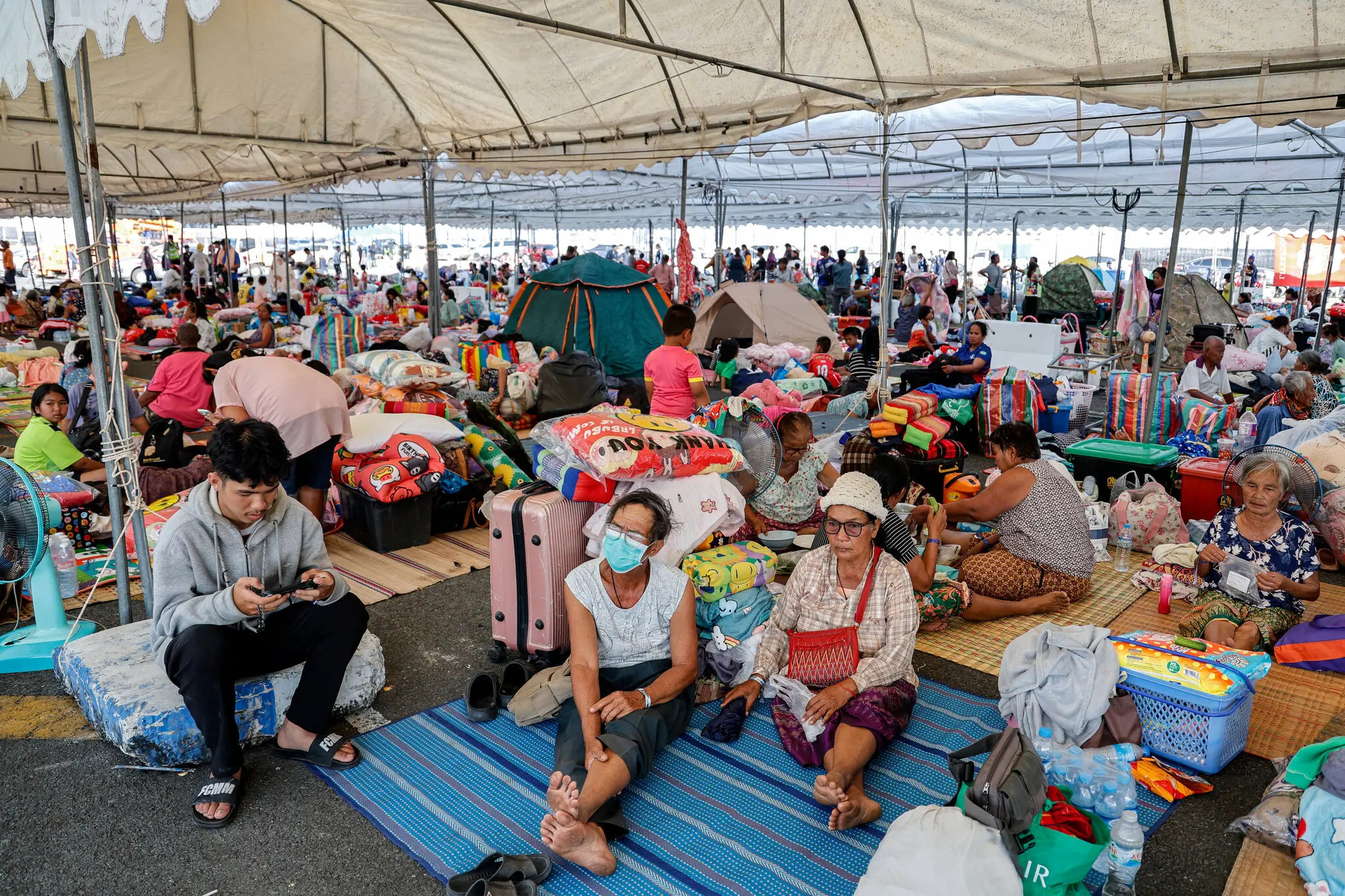
Monday’s attacks followed an exchange of fire the previous day that did not appear to be deadly. Still on Sunday, officials ordered residents in four Thai provinces along the border — Buriram, Surin, Sisaket and Ubon Ratchathani — to evacuate to shelters. The Thai military said that roughly 438,000 people had done so. Cambodian officials said on Monday that tens of thousands on their side had moved away from the border.
Malaysia’s leader, Anwar Ibrahim, who with Mr. Trump brokered the cease-fire in July, called on both Thailand and Cambodia to exercise restraint.
Tensions had ratcheted up on Sunday, when Thailand said that Cambodian troops had opened fire in the Thai province of Sisaket, prompting Thai forces to respond. Two Thai soldiers were injured, the Thai authorities said.
Cambodia’s Defense Ministry accused Thailand of firing first, into the Cambodian province of Preah Vihear, using handguns, B40 rocket launchers and 60 millimeter mortars. It said Cambodian forces contacted the Thais and demanded an immediate halt to the firing and that Cambodia had not fired back. The Thai military, it said, then stopped firing within 15 minutes.

The next day, the Thai Army said that Cambodia opened fire with small arms early in the morning in the Nam Yuen district of Ubon Ratchathani Province, killing at least one soldier and injuring eight others.
Maj. Gen. Winthai Suvaree, the Thai Army spokesman, said the F-16 airstrikes hit three Cambodian military installations near the border, including a radio tower near the Preah Vihear Temple. Cambodia did not immediately address the aftermath of the strikes but said four civilians had been killed and nine others injured by Thai fire.
On Monday evening, the Thai military said that it was expecting Cambodia to fire more BM-21 rockets into Thai territory.
Thailand’s deployment of F-16s to bomb Cambodian military targets in July was the first time it had used fighter jets in combat in three decades. It was one factor that brought the five-day border war to a halt — Thailand has a much better-equipped military than Cambodia, which has virtually no operational air force.
The ensuing cease-fire was brokered by the United States and Malaysia. In October, Thailand and Cambodia agreed to let observers from the Association of Southeast Asian Nations, or Asean, monitor the truce. On Monday, Cambodia said it planned to request an Asean investigation into the latest hostilities.